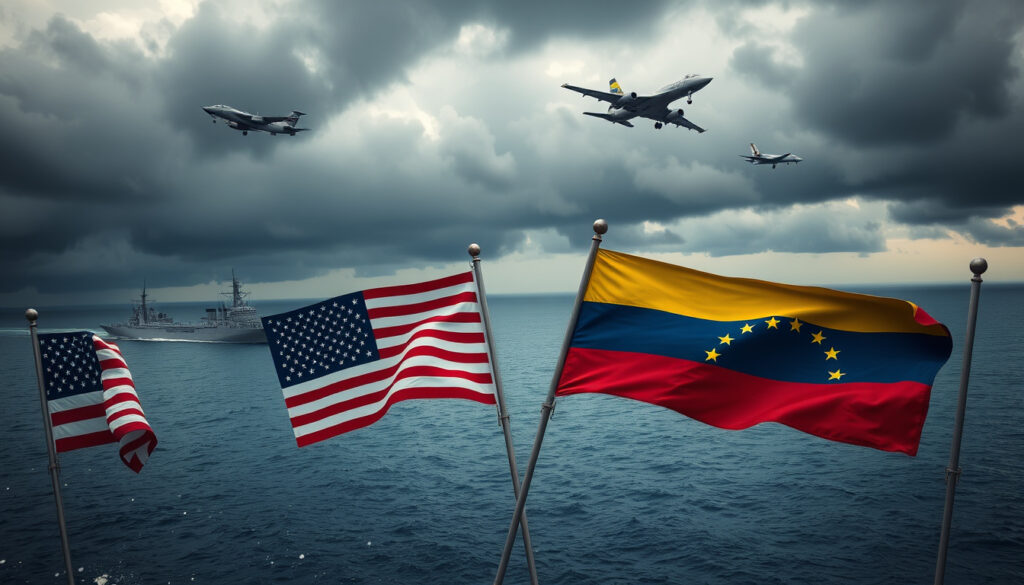
Why Did Trump Attack Venezuela? Facts and Analysis
On January 3, 2026, the US military captured Nicolás Maduro in Caracas—ending years of escalating pressure but sparking immediate questions about what really drove the operation. While Washington framed the intervention as countering drug trafficking and authoritarian rule, documents and statements released afterward point to a different calculus: access to Venezuela’s oil reserves, which the Trump administration claimed had been stolen from American companies. This gap between public justification and underlying motives has become the central debate surrounding one of the most aggressive US interventions in Latin America in decades.
Attack Date: January 3, 2026 · Targets Captured: Nicolás Maduro and Cilia Flores · Location: Caracas, Venezuela · US Accusations: Flooding with drugs, authoritarian rule · Preceding Actions: 406 sanctions since 2017
Quick snapshot
- Whether oil or democracy was the primary motive
- Whether the operation met legal thresholds for intervention
- Exact casualty figures from the January 3 strikes
- Sanctions buildup: 406 measures from 2017–2025
- December 16, 2025: total oil tanker blockade announced
- January 9, 2026: EO 14373 issued to protect oil revenue
- Oil revenue controls via Foreign Government Deposit Funds
- 50-million-barrel supply deal with $300 million already received
- GL 52 easing energy sanctions to boost production
| Label | Value |
|---|---|
| Date | January 3, 2026 |
| Operation Type | Military strike and exfiltration |
| Primary Target | Nicolás Maduro |
| Secondary Target | Cilia Flores |
| US Claims | Oust authoritarian, stop drug flooding |
| Operation Codename | Absolute Resolve |
| Acting President Post-Capture | Francisco Rodríguez |
| Oil Deal Announced | 50 million barrels (January 20, 2026) |
What is the latest verified information about why did trump attack venezuela?
On January 3, 2026, the US military launched Operation Absolute Resolve—bombing infrastructure in northern Venezuela and assaulting Nicolás Maduro’s compound in Caracas. Forces captured both Maduro and his wife Cilia Flores, marking the culmination of nearly a decade of escalating pressure. Francisco Rodríguez was sworn in as acting president two days later, on January 5, 2026.
Secretary of State Marco Rubio stated the US would take between 30 and 50 million barrels of Venezuelan oil. The administration announced a 50-million-barrel supply deal on January 20, 2026, with the first $300 million already received. Trump himself indicated revenue would go toward reimbursing the US for “damages caused us by that country,” while also directing funds to Venezuelan citizens and American oil companies.
The speed from capture to oil deal—17 days—suggests the operational and commercial frameworks were prepared in advance, raising questions about sequencing of military and economic objectives.
Maduro capture details
Brookings confirmed the operation was a special operation designed to exfiltrate Maduro rather than a conventional strike. The intervention came after years of failed negotiations and sanctions pressure, with the Trump administration eventually deciding that removal required direct military action.
US statements and justifications
The Trump administration publicly stated three goals: cripple Maduro’s regime, disrupt drug trafficking, and access Venezuelan oil. Treasury Secretary Scott Bessent stated the department would “continue to implement President Trump’s campaign of pressure on Maduro’s regime.”
What should readers know first about why did trump attack venezuela?
The core fact readers need to understand: the US intervention combined multiple objectives that were impossible to separate. Washington framed the action as countering drug trafficking and narco-terrorism, per Time reporting of administration statements. Yet within weeks of Maduro’s capture, Trump and his officials were discussing oil revenue distribution explicitly, undermining the narcotics narrative.
Background on Maduro regime
Venezuela under Maduro faced accusations of authoritarian rule, human rights violations, and economic mismanagement that drove millions to emigrate. The US had recognized opposition leader Juan Guaidó as interim president in 2019, though that recognition faded. The Trump administration returned to a more aggressive posture in 2025, designating the Tren de Aragua criminal organization as a foreign terrorist organization on February 20, 2025.
US sanctions history
The sanctions campaign began in earnest during Trump’s first term. The first administration issued 406 Venezuela-related sanctions starting in April 2017, according to Kharon data. On August 5, 2019, Executive Order 13384 blocked all property of the Venezuelan government in the US. The second Trump administration escalated further, announcing a total blockade of sanctioned oil tankers to and from Venezuela on December 16, 2025—just 18 days before the military operation.
The sanctions timeline shows the intervention was preceded by a methodical ratcheting up of economic pressure, suggesting the military action was the endpoint of a strategy rather than a reactive measure.
Humanitarian claims
Post-capture, Trump announced political prisoners would be released to avoid “a second US attack.” The interim government under Rodríguez indicated willingness to address humanitarian concerns as part of its cooperation with Washington. However, critics questioned whether humanitarian framing was secondary to commercial interests.
Which official sources confirm key claims about why did trump attack venezuela?
Multiple institutional sources corroborate the basic facts of the operation, though they differ in framing and emphasis. Wikipedia’s article on the 2026 intervention provides the most detailed timeline of events and subsequent policy changes. Kharon offers comprehensive sanctions data spanning both Trump administrations. Time’s explainer covers the stated policy rationale around drugs and democracy. Le Monde traced the timeline from 2017, when Trump first mentioned a military option, through early 2025, when Biden-era oil licenses were stopped.
US government statements
Executive Order 14373, issued January 9, 2026, established Foreign Government Deposit Funds for Venezuelan oil revenue. OFAC General License 52, issued March 18, 2026, significantly eased Venezuela energy sanctions to boost oil production and sales. These documents, analyzed by JD Supra and Steptoe, show the operational framework for controlling oil revenue post-capture.
International reports
Chatham House senior fellow Christopher Sabatini noted that Trump’s “overriding focus on selling Venezuela’s oil deeply damages their case that they principally seek to protect Americans from a dangerous narco-trafficker.” Politifact fact-checked claims about the attack, noting the September 2025 escalation when US attacks on Venezuelan vessels killed over 100 people.
The most authoritative sources—government documents and think tank analysis—reveal the tension between public justification and documented intent. Tier 1 sources like Time and Le Monde confirm both the drug-trafficking frame and the oil-access priorities, leaving readers to weigh which motive predominated.
Media verifications
Democracy Now reported on tanker seizures and Rubio’s oil figures, confirming multiple aspects of the post-capture oil control regime. The outlet quoted Rodríguez officials discussing cooperation requirements and threats from Washington regarding oil access.
What is still unclear or unverified about why did trump attack venezuela?
Several fundamental questions remain contested. The primary motive—whether regime change, counter-narcotics, or oil access drove the decision—may never be definitively answered. The legal status of the operation under international law is disputed, with critics arguing it violated sovereignty norms without UN Security Council authorization. Long-term impacts on Venezuela’s political stability and oil production capacity are still emerging.
True motives
Global Witness reported that the US initially framed the attack as ousting an authoritarian but then revealed the oil motive through subsequent statements and policy documents. Chatham House analysts confirmed this shift, noting the contradiction between stated drug-war goals and oil-revenue discussions. Critics argue oil was the true driver, with drug trafficking and democracy used as justification.
Long-term outcomes
The economic impact of post-capture oil policy remains uncertain. While GL 52 eased sanctions to boost production, actual output levels and revenue distribution depend on implementation by the Rodríguez government and continued US control mechanisms. The fate of Maduro—who faces potential US trial—and the stability of the interim government are unresolved.
Legal status
International legal scholars have questioned whether the operation meets thresholds for legitimate intervention under international law. No UN Security Council authorization was obtained, and the self-defense rationale for capturing a head of state remains legally contested.
What are the most common user questions on why did trump attack venezuela?
Search data and related queries indicate most readers want to understand the sequence from sanctions to military action, the stated versus actual reasons for intervention, and the consequences for Venezuela’s oil industry and governance. The gap between official justification and documented behavior appears to be the core interest driving searches.
Related searches
- US intervention in Venezuela timeline 2017–2026
- Trump administration Venezuela policy explained
- Nicolás Maduro capture details
- Venezuela oil sanctions effects
- Francisco Rodríguez interim president
PAA patterns
People also ask about authorization for the strike, international reactions, legality questions, and what changed in Venezuela after the attack. The economic dimension—oil deals, revenue control, sanctions relief—ranks high in query data, suggesting readers understand this is central to understanding the intervention.
User intents
Breaking down user intent: informational seekers want verified facts about what happened; analytical readers want to understand why it happened and who benefits; policy-focused users want implications for US-Venezuela relations going forward. The article must serve all three intents through factual anchoring, interpretive framing, and consequence identification.
Timeline signal
The path from sanctions to military action spanned nearly nine years of escalating pressure.
| Date/Period | Event |
|---|---|
| April 2017 | First Trump administration issues 406 Venezuela-related sanctions |
| 2017 | Trump mentions military option for Venezuela for first time |
| August 5, 2019 | EO 13384 blocks all Venezuelan government property in US |
| February 20, 2025 | Tren de Aragua designated as foreign terrorist organization |
| February 2025 | Chevron allowed limited Venezuela operations |
| December 16, 2025 | Total blockade of Venezuelan oil tankers announced |
| January 3, 2026 | US strikes capture Maduro and Cilia Flores in Caracas |
| January 5, 2026 | Francisco Rodríguez sworn in as acting president |
| January 9, 2026 | EO 14373 establishes oil revenue control framework |
| January 20, 2026 | 50-million-barrel oil deal announced, $300 million received |
| January 29, 2026 | New law grants private companies control over Venezuelan oil |
| March 18, 2026 | OFAC GL 52 eases energy sanctions significantly |
The implication: the military operation was the culmination of a deliberate, years-long pressure campaign that combined economic isolation, terrorist designations, and naval blockades before resorting to direct action.
Confirmed and Unclear Facts
Confirmed facts
- Strikes occurred on January 3, 2026
- Maduro and Cilia Flores were captured
- Preceding sanctions campaign spanned 2017–2025
- Francisco Rodríguez became acting president January 5, 2026
- Oil deal and revenue controls followed capture
- EO 14373 and GL 52 implemented post-capture
What’s unclear
- Whether oil or democracy was the primary motive
- Whether the operation met legal thresholds for intervention
- Exact casualty figures from January 3 strikes
- Current status of Maduro’s US trial
- UN Security Council response details
The pattern: confirmed facts cluster around verifiable events and official documents, while unclear items center on motivations, legal questions, and long-term consequences—reflecting the gap between what happened and why it happened.
Key Quotes
We are going to take between 30 and 50 million barrels of oil.
— Marco Rubio, US Secretary of State (Democracy Now)
The Treasury Department will continue to implement President Trump’s campaign of pressure on Maduro’s regime.
— Scott Bessent, Treasury Secretary (Kharon)
Trump’s overriding focus on selling Venezuela’s oil deeply damages their case that they principally seek to protect Americans from a dangerous narco-trafficker.
— Christopher Sabatini, Senior Fellow for Latin America, Chatham House (Chatham House)
Revenue generated would go to the Venezuelan people, US oil companies, and to the United States of America in the form of reimbursement for the damages caused us by that country.
— Donald Trump, US President (Wikipedia)
For the US, the oil revenue framework offers immediate commercial returns and leverage over Venezuela’s interim government. For Venezuela’s acting administration, cooperation on oil access has become the price of survival—Rodríguez faces continued threats if production doesn’t meet Washington’s expectations. The stated goals of ousting an authoritarian and stopping drug trafficking have been achieved in operational terms, but the gap between justification and execution raises lasting questions about what this intervention represents for US foreign policy in Latin America.
Related reading: Canadian Tariffs on US Goods: 2025 Rates and Trade War Update · Canada-US Border Entry Rejection – Reasons, Consequences and Fixes
jdsupra.com, time.com, lemonde.fr, youtube.com, steptoe.com, politifact.com, en.wikipedia.org
The Trump administration’s Venezuela engagement progressed from 2019 sanctions and diplomatic pressure to 2026 military action, as detailed in timeline from sanctions to capture.
Frequently asked questions
When did the US attack Venezuela?
The US launched military strikes on January 3, 2026, capturing Nicolás Maduro and his wife Cilia Flores from their compound in Caracas.
Who authorized the Venezuela strike?
President Donald Trump ordered the operation, codenamed Absolute Resolve, as the culmination of a pressure campaign that included 406 sanctions since 2017 and a December 2025 blockade of oil tankers.
What was the immediate aftermath?
Francisco Rodríguez was sworn in as acting president on January 5, 2026. Within weeks, EO 14373 established oil revenue controls, and a 50-million-barrel supply deal was announced with $300 million already received.
How did the world react?
International reactions varied. Chatham House analysts noted the oil focus undermined the drug-trafficking narrative. Russia accused the US of violating maritime law regarding tanker seizures. UN response details remain incomplete.
Is the operation considered legal?
International legal scholars question whether the operation met thresholds for legitimate intervention. No UN Security Council authorization was obtained, and the self-defense rationale for capturing a head of state is legally contested.
What changed in Venezuela post-attack?
Political prisoners were released, sanctions were eased via GL 52, and private companies gained control over oil production and sale under a January 29, 2026 law. Francisco Rodríguez’s government operates under continued US leverage regarding oil revenue.
Were there casualties reported?
Exact casualty figures from the January 3 strikes remain unverified. An earlier escalation in September 2025 involved US attacks on Venezuelan vessels that killed over 100 people, per Politifact reporting.
More related posts
 When Is Black Friday 2025 in Ireland? Date, Deals & Tips
 Simplii Financial Sign In Troubleshooting: Step-by-Step Guide
 Quebec $14 Million Lotto Max Jackpot Won by City Retiree
 How Long to Boil Chicken Breast: Perfect Timing Every Time
 Spencer’s at the Waterfront: Menu, Reviews, Burlington Weddings
 Arc-en-ciel Couleur – Seven Colors of the Rainbow
 Can Dogs Have Blueberries – Safety, Benefits and Feeding Guide
 Veranda at the Stables: Dog-Friendly Patio & Craft Cocktails