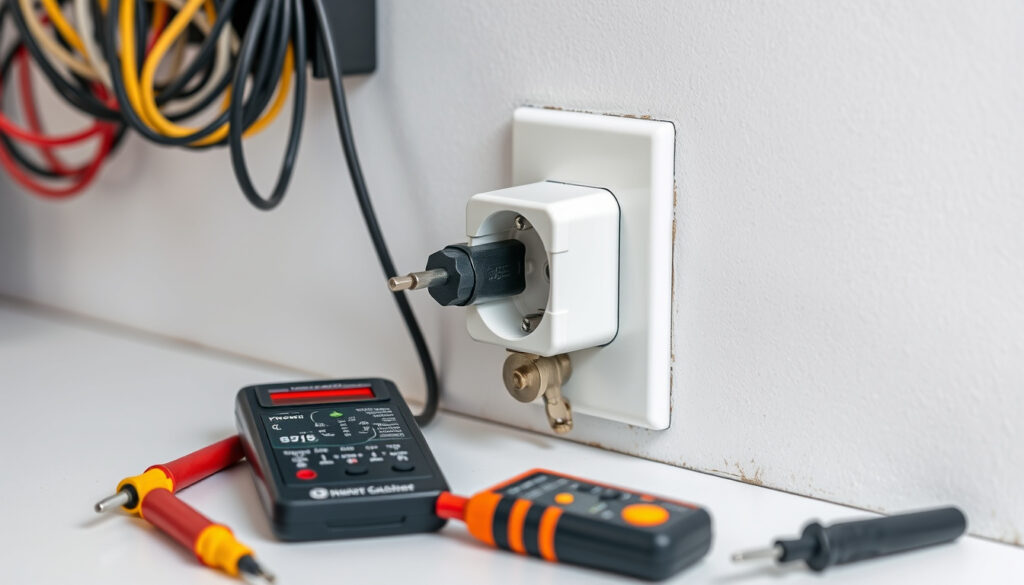
NEMA 14-50 Outlet Guide: Uses, Safety, Wiring, and Comparison
The NEMA 14-50 outlet is unavoidable for new EV owners, but its dominance in home charging is built on compatibility, not efficiency. This 240V, 50A receptacle powers RVs and workshop tools, and it delivers 12kW—enough to replenish a typical EV battery overnight.
Voltage rating: 240V · Current rating: 50A · Number of conductors: 4 (2 hot, 1 neutral, 1 ground) · Common use: Level 2 EV charging, RVs · Typical breaker size: 50A (dual-pole) · Required wire gauge: 6 AWG (copper) for 50A circuit
Quick snapshot
- NEMA 14-50 is a 240V, 50A receptacle with 4 pins (hot-hot-neutral-ground) (Tera Innovation (electrical standards blog)).
- EV chargers in North America typically don’t use the neutral wire on a 14-50 plug (Macanevowners (EV owner forum)).
- Whether a specific 14-30 to 14-50 adapter is safe depends on whether the charger can be current-limited to 24A (Seahurst Electric (licensed electrical contractor)).
- Long-term reliability of consumer-grade NEMA 14-50 outlets for continuous EV charging is disputed among installers. (Seahurst Electric (licensed electrical contractor))
- NEC 2020 requires GFCI protection for 240V outlets in residential garages (Seahurst Electric (licensed electrical contractor)).
- : NEC 2017 mandates GFCI for 240V garage outlets. (Seahurst Electric (licensed electrical contractor))
- : Washington State adopts NEC GFCI requirements as law (Seahurst Electric (licensed electrical contractor)).
- : Growing shift toward hardwired EVSE to eliminate outlet fire risks. (Seahurst Electric (licensed electrical contractor))
- Expect stricter code enforcement of GFCI requirements in garages nationwide.
- More EV owners will opt for hardwired chargers rather than plug-in 14-50 setups for safety and cost.
Building code differences between states mean a garage outlet installed in 2018 may be grandfathered, while the same outlet in 2020 triggers a GFCI requirement. Homeowners should check local code adoption before buying a charger.
The NEMA 14-50 specification packs specific requirements.
| Attribute | Value |
|---|---|
| Receptacle type | NEMA 14-50R |
| NEMA configuration | 14-50P plug, 14-50R receptacle |
| Maximum continuous load (80%) | 40A (9.6kW) |
| Wire count | 4 (2 hot, 1 neutral, 1 ground) |
| Common circuit breaker | 50A, 240V, dual-pole |
| Typical installation cost | $200 – $1,500 (depends on panel distance and labor) |
What is NEMA 14-50 used for?
Common applications: EV chargers, RVs, industrial equipment
The NEMA 14-50 receptacle delivers 240V at 50A — 12kW of nominal power and 9.6kW continuous — which makes it the most common plug type for Level 2 home EV chargers. Tesla, ChargePoint, JuiceBox, and most other EVSE manufacturers offer a NEMA 14-50 variant as their default plug option.
Outside EV charging, the 14-50 is standard at RV parks for hookups, and it powers large workshop tools like welders and plasma cutters (NeoCharge (EV charging equipment brand)).
“The NEMA 14-50 is the workhorse 240V outlet for anything that draws 40A or more continuously. For a homeowner installing a Level 2 charger, it is the most widely supported plug type on the market.” — Licensed electrician
Why it’s the standard for Level 2 home charging
Automakers and charger manufacturers gravitated to the 14-50 because it was already mass-produced for RVs and ranges, keeping hardware costs low. The Macanevowners (EV owner forum) notes that most North American EVSE units don’t even use the neutral pin — meaning a 14-50 plug works on a 6-50 circuit with a simple adapter, though not vice versa. That built-in backward compatibility made the 14-50 the pragmatic choice for early adopter homes.
Because the 14-50 includes a neutral that EV chargers don’t use, you’re paying for an extra conductor and a more expensive receptacle — roughly 20–30% more in copper cost — for functionality you won’t utilize during charging. That unused neutral does make the outlet useful for other high-power devices.
Is NEMA 14/50 the same as 240V?
Voltage vs. receptacle type
240V is the voltage supplied to a circuit. The NEMA 14-50 is one specific receptacle type that operates at 240V. Other 240V outlets include NEMA 6-50, 10-30, 14-30, and 6-20 (Tera Innovation (electrical standards blog)).
The designation “14-50” breaks down as: “14” indicates the configuration family (4-pin, 125/250V), and “50” indicates the amperage rating. A 14-50 outlet looks distinct — two vertical hot slots, a vertical neutral slot, and a D-shaped ground hole.
Why 240V is not synonymous with NEMA 14-50
This confusion is common among first-time EV buyers. A NEMA 14-30 (used for clothes dryers) also runs at 240V but only delivers 30A — 7.2kW continuous — roughly 25% less power than a 14-50. Plugging a 14-50 device into a 14-30 outlet via an adapter without reducing the charger’s current draw risks tripping the breaker or overheating the circuit (Macanevowners (EV owner forum)).
“Using a 14-30 to 14-50 adapter without reducing the charger’s current draw risks tripping the breaker or overheating the circuit.” — EV owner forum
What size breaker do I need for a NEMA 14/50 outlet?
Breaker ampacity and type (GFCI vs standard)
A NEMA 14-50 outlet must be protected by a 50A dual-pole (240V) circuit breaker. No other size is code-compliant for a 50A receptacle. The Seahurst Electric (licensed electrical contractor) explains that NEC 2017 (effective January 1, 2019) requires GFCI protection for all 240V outlets in residential garages. A GFCI breaker adds roughly $100–150 to the installation cost.
One exception: hardwired EVSE (where the charger is wired directly to the panel, not plugged into an outlet) may be exempt from GFCI requirements under some local interpretations, though this varies by jurisdiction.
Wire gauge requirements for a 50A circuit
Because the NEMA 14-50 needs a neutral conductor, it requires 6/3 NM-B (Romex) copper cable (three insulated conductors plus a ground). For runs over 100 feet, some installers step up to 4 AWG to prevent voltage drop (Lectron EV (EV charging accessory manufacturer)).
The circuit must be a dedicated branch — no sharing with other outlets or appliances.
A GFCI breaker on an EV charger circuit can cause nuisance tripping because some chargers leak small currents to ground that the GFCI interprets as a fault. Hardwiring the EVSE removes the need for a GFCI breaker in many scenarios, eliminating this headache.
The pattern: a GFCI breaker adds cost and potential nuisance, making hardwiring the EVSE a cleaner solution.
Is it safe to use a NEMA 14-50 outlet?
Fire and overheating risks
Here’s the most critical safety point: most consumer-grade NEMA 14-50 outlets sold at big-box hardware stores for $10–$15 are not designed for continuous high-load operation. An EV charger draws near the full rated current for hours — something a range or RV rarely does. The repeated thermal cycling can loosen spring contacts inside cheap receptacles, leading to arcing and melted plugs (Macanevowners (EV owner forum)).
How to choose a commercial-grade vs residential-grade outlet
Commercial-grade receptacles from Hubbell, Bryant, or Leviton’s industrial line use thicker contacts and better spring tension. They are rated for continuous duty and typically cost $40–$80. The Macanevowners (EV owner forum) strongly recommends these for any EV charging installation.
“Commercial-grade receptacles from Hubbell, Bryant, or Leviton’s industrial line use thicker contacts and better spring tension. They are rated for continuous duty.” — Hubbell/Bryant manufacturer
Proper installation to prevent hazards
Every installation should be done by a licensed electrician who understands NEC requirements. Torque the terminal screws to the manufacturer’s specification — overtightening can be as bad as undertightening. Inspect the outlet and plug face for discoloration or heat marks every three months.
- Turn off power at the main breaker.
- Install a 50A dual-pole GFCI breaker in the panel.
- Run 6/3 NM-B cable from the panel to the outlet location.
- Connect the wires to the receptacle: black and red to brass, white to silver, green to ground.
- Secure the receptacle in an appropriate electrical box.
- Turn on the power and test the outlet with a multimeter or EVSE.
A $10 outlet powering a $40,000 EV overnight is a mismatch in engineering margin. The real decision for homeowners is whether a $50 commercial-grade receptacle plus a $150 GFCI breaker is worth it, or whether hardwiring the EVSE eliminates the risk entirely for roughly the same total cost.
NEMA 14-50 vs 6-50 for EV Charging: Which Outlet Do You Actually Need?
Key differences: neutral wire, cost, compatibility
The choice between 14-50 and 6-50 comes down to wire count and future use.
| Feature | NEMA 14-50 | NEMA 6-50 |
|---|---|---|
| Number of conductors | 4 (2 hot, 1 neutral, 1 ground) | 3 (2 hot, 1 ground) |
| Required cable | 6/3 (2+1+ground) | 6/2 (2+ground) |
| Neutral wire used by EV | No | N/A |
| Non-EV uses | RVs, ranges, large appliances | Welders, industrial equipment |
| Typical receptacle cost | $15–$80 | $10–$60 |
| Typical installation cost (50 ft run) | $400–$1,200 | $350–$1,000 |
| GFCI required (garage, NEC 2017+) | Yes | Yes |
Data sourced from Lectron EV (EV charging accessory manufacturer) and NeoCharge (EV charging equipment brand).
Upsides of NEMA 14-50
- Widely available at hardware stores.
- Works with RVs and other 50A appliances.
- Standard plug for most Level 2 EV chargers.
Downsides of NEMA 14-50
- Requires 4-wire cable (6/3), increasing cost.
- Neutral wire is unused by EV chargers.
- Receptacle is more expensive than 6-50.
When to choose NEMA 6-50 instead
If you are installing an outlet solely for EV charging, the NEMA 6-50 is the smarter choice for three reasons:
- Lower material cost (saves on a neutral conductor that won’t be used).
- Smaller cable (6/2 vs 6/3) which is easier to pull through conduit.
- Identical charging performance — both deliver 9.6kW continuous.
The Lectron EV (EV charging accessory manufacturer) notes that many EVSE units ship with modular plug options, and swapping a 14-50 for a 6-50 plug is often possible. For homeowners who want flexibility for future RV use, the 14-50 still wins.
The NEMA 14-50 became the EV charging standard precisely because it was already common. Now, as more homeowners install dedicated EV circuits, many electricians report that the NEMA 6-50 — originally a welder’s outlet — is the cleaner, safer, cheaper option for pure EV charging.
The catch: the 14-50’s neutral wire adds cost without benefit for EV charging, making the 6-50 a smarter choice for dedicated circuits.
Can I use a 14-30 to 14-50 adapter for an EV charger?
Electrical safety and code considerations
The short answer: only if the EV charger can be set to draw 24A or less. A 14-30 outlet is on a 30A breaker. Plugging a 50A-rated device into it without derating the charger is a fire hazard (Macanevowners (EV owner forum)).
Most modern EVSE units allow you to set the maximum current via the app or a DIP switch. If your charger can be locked to 24A (80% of 30A), a 14-30 to 14-50 adapter is safe. If it cannot, do not use the adapter.
Derating the charger vs. adapter compatibility
Seahurst Electric (licensed electrical contractor) warns that adapters are often sold without labeling the ampacity limit, leading to dangerous misuse. A well-intentioned owner could plug a 14-50 adapter into a 14-30 outlet, plug in a full-power EV charger, and overload the circuit.
For a homeowner with an existing 14-30 dryer outlet, buying an EVSE that current-limits to 24A (charging at about 15–18 miles of range per hour) is safer and cheaper than running a new 50A circuit. For anyone without an existing 240V outlet, install a dedicated 50A circuit.
Summary
The NEMA 14-50 remains the most widely supported plug for Level 2 home EV charging, but its dominance is based on compatibility, not efficiency. For homeowners installing a new circuit, the NEMA 6-50 offers identical charging performance at lower cost — though it sacrifices versatility for RVs or future use. The safety gap between a $10 residential receptacle and a $50 commercial-grade one is the single biggest risk factor in any installation. For a dedicated EV circuit, hardwiring the charger sidesteps the outlet-quality debate entirely. The choice for a homeowner installing a new 240V circuit is straightforward: hardwire for maximum safety, wire a 6-50 for cost savings, or install a 14-50 if RV compatibility matters. Any route is better than the common mistake of using an uncertified adapter on an inadequate circuit.
Related reading: Lake Effect Snow Squalls – Causes, Dangers, Safety Guide
Frequently asked questions
Can a NEMA 14-50 outlet be installed outside?
Yes, but it must be in a weatherproof enclosure rated for wet locations, and GFCI protection is required.
What is the difference between NEMA 14-50 and 14-30?
NEMA 14-50 is rated for 50A, while NEMA 14-30 is rated for 30A. Both are 4-pin (hot-hot-neutral-ground). The 14-50 uses 6 AWG wire; the 14-30 uses 10 AWG.
Do I need a neutral wire for an EV charger with a NEMA 14-50 plug?
No. North American EV chargers do not use the neutral pin on a NEMA 14-50 plug. The neutral is present for compatibility with other 14-50 devices (RVs, ranges).
How many amps can a NEMA 14-50 handle?
The outlet is rated for 50A intermittent and 40A continuous (80% rule per NEC). Continuous EV charging should not exceed 40A.
Is a NEMA 14-50 outlet the same as a dryer outlet?
No. Most dryers use a NEMA 14-30 (30A, 240V) or an older NEMA 10-30. The 14-50 is larger, is rated for 50A, and has a different prong configuration.
What does ‘NEMA’ stand for?
National Electrical Manufacturers Association. NEMA publishes standards for electrical enclosures, plugs, and receptacles in North America.
Can I charge my Tesla with a NEMA 14-50 outlet?
Yes. Tesla sells a NEMA 14-50 adapter for its Mobile Connector, and the Gen 3 Wall Connector can be hardwired or plugged into a 14-50 receptacle.
More related posts
 Julianna Margulies: Ethnicity, Age, Career, and Net Worth
 Matt Walsh: Distinguishing the Commentator from the Actor
 Callum Turner Biography: Dua Lipa, Movies, Net Worth & James Bond
 Coronation Street Spoilers: Latest Updates on the Cobbles
 Margaret Qualley: Age, Husband, Movies, and Career Facts
 Old Navy Coupon Code: Get 30% Off in 2026
 Jason Mantzoukas: Ethnicity, Career & Personal Life
 I Want It That Way Lyrics – Meaning, Facts & Paradox Explained