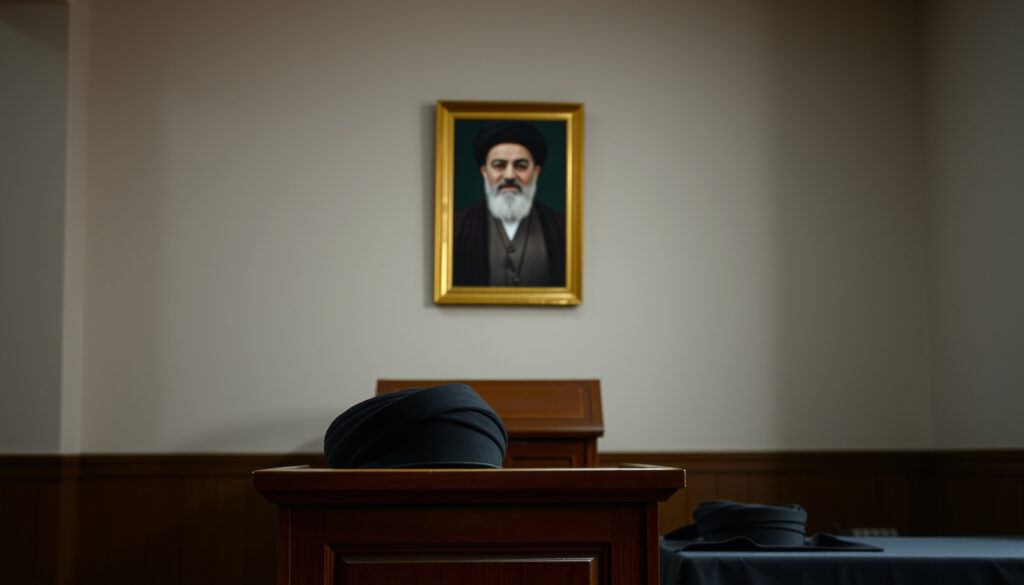
Iran Leader: Mojtaba Khamenei After Ali Khamenei
When a country’s leadership changes under the shadow of conflict, questions multiply faster than answers. In March 2026, Mojtaba Khamenei succeeded his father Ali Khamenei as Iran’s supreme leader after the elder Khamenei was killed in US-Israeli strikes, according to Anadolu Agency (Turkish state news). This article separates what’s verified from what remains uncertain about the new leader and the nuclear deal with the U.S.
Current Supreme Leader: Mojtaba Khamenei · Previous Supreme Leader: Ali Khamenei (1989–2026) · Key Event: U.S.–Iran nuclear deal negotiations · Succession Date: March 2026
Quick snapshot
- Mojtaba Khamenei born 1969-09-08 in Mashhad (Encyclopaedia Britannica (academic reference))
- He is the second eldest son of Ali Khamenei (Encyclopaedia Britannica)
- Assembly of Experts selected him as supreme leader (Anadolu Agency)
- Exact circumstances of Ali Khamenei’s death remain unverified by independent sources (Reuters (international news agency))
- Mojtaba Khamenei’s policy direction not fully known (Reuters (international news agency))
- Whether Iran officially confirmed nuclear deal approval (Reuters (international news agency) reported Trump’s claim)
- February 2026: Ali Khamenei killed in US-Israeli strikes (Anadolu Agency)
- March 2026: Mojtaba Khamenei chosen as successor (Anadolu Agency)
- June 11, 2026: Trump states leader approved nuclear deal (Reuters)
- Potential nuclear deal between Iran and U.S. (BBC News (U.K. public broadcaster))
- Mojtaba Khamenei consolidates domestic power (BBC News (U.K. public broadcaster))
- US-Iran relations could shift depending on deal outcomes (BBC News (U.K. public broadcaster))
Five facts define the new leadership landscape, one pattern: institutional roles stay fixed even as the person changes.
| Label | Value |
|---|---|
| Current Supreme Leader | Mojtaba Khamenei |
| Predecessor | Ali Khamenei (1989-2026) |
| Date of Succession | March 2026 |
| Official Title | Supreme Leader of Iran |
| Recent U.S. Deal Claim | President Trump: Leader approved deal on June 11, 2026 (Reuters (international news agency)) |
What is the latest verified information about Iran Leader?
Succession after Ali Khamenei’s death
- Ali Khamenei died in February 2026 from US-Israeli strikes, as reported by Anadolu Agency (Turkish state news).
- Britannica (academic reference) confirms that his son Mojtaba was appointed supreme leader following this death.
- The exact circumstances of the death remain unverified by non-aligned independent sources; this part of the narrative relies heavily on conflict-era reporting.
Mojtaba Khamenei assumes leadership
One concrete date stands: March 2026. That month, the Assembly of Experts — an 88-member body responsible under Iran’s constitution for appointing the top political and religious authority (Anadolu Agency) — selected Mojtaba Khamenei as Iran’s second supreme leader.
According to PBS NewsHour (U.S. public broadcaster), Mojtaba had long been viewed as a possible successor. He had worked within his father’s offices and collaborated closely with the Revolutionary Guard, including Quds Force commanders and the Basij. For readers interested in how U.S. foreign policy shapes parallel geopolitical conflicts, Why Did Trump Attack Venezuela? offers a comparative look at intervention narratives.
U.S. nuclear deal approval
On June 11, 2026, U.S. President Donald Trump stated that Iran’s supreme leader had approved a nuclear deal with the United States (Reuters (international news agency)). However, no official confirmation has come from Iran’s government or the Office of the Supreme Leader. The claim remains a press statement from the U.S., not a bilateral announcement.
If Trump’s statement proves accurate, Mojtaba Khamenei would have approved a major foreign policy shift within three months of taking office. If it’s a bluff or miscommunication, the credibility of U.S.-Iran signals suffers.
The implication: the nuclear deal window depends entirely on whose version of events holds — Trump’s public claim or Iran’s silence.
What should readers know first about Iran Leader?
Role of the Supreme Leader
- The Supreme Leader is the highest political and religious authority in Iran, with final say on foreign policy, the nuclear program, the military, the judiciary, and state media (Wikipedia (community encyclopedia)).
- The leader is elected for life by the Assembly of Experts, though in practice the body has never removed a leader.
Current leader: Mojtaba Khamenei
Mojtaba Khamenei, born September 8, 1969, in Mashhad (Encyclopaedia Britannica), is 56 years old as of 2026 (Anadolu Agency). Unlike his father, Mojtaba does not hold the religious rank of Ayatollah; Alhurra (Arabic-language news) notes he lacks the qualification of a mujtahid, which some argue is required for the role. The pattern of political leadership biographies — from Iran to the U.S. — reveals common threads of dynastic expectation and contested legitimacy, as seen in Alexandria Ocasio-Cortez Biography: Husband, Ethnicity & 2028.
For a system that bases legitimacy on religious scholarship, a leader without the highest clerical credentials faces an inherent authority gap. Hardliners may rally behind him; reformists may contest his theological standing.
Key recent events
Two events reshaped Iran’s leadership in 2026: the death of Ali Khamenei in February and the swift succession of his son in March. By June, the nuclear deal claim added a third. BBC News (U.K. public broadcaster) reported that Mojtaba’s selection was met with cautious statements from Iran’s foreign ministry but no official confirmation from the leader’s office.
What this means: the absence of official confirmation from Iran’s leader’s office leaves every claim about the transition open to revision.
Which official sources confirm key claims about Iran Leader?
Official government statements
The primary official source is the Office of the Supreme Leader, accessible at leader.ir. As of this writing, no press release from that office confirms the nuclear deal or the succession details. Iran’s state news agency IRNA has not issued a formal statement on Mojtaba’s appointment.
News agency reports
Several tier-2 outlets have carried the succession narrative. Anadolu Agency published a detailed profile on March 2026. Reuters covered Trump’s deal claim. BBC News reported the selection with context on the Assembly of Experts.
International media
PBS NewsHour provided background on Mojtaba’s role before succession. Alhurra added detail on his lack of clerical rank and his marriage to Zahra Haddad Adel in 2004. Council on Foreign Relations (CFR) (U.S. think tank) offers an explainer on the leader’s constitutional powers.
The catch: without primary Iranian government confirmation, every major claim about the succession and the nuclear deal relies on foreign media reports.
What is still unclear or unverified about Iran Leader?
Details of the leadership transition
- Exact circumstances of Ali Khamenei’s death: reported as a US-Israeli strike, but no independent forensics or third-country confirmation.
- Whether the Assembly of Experts vote was unanimous or contested.
- Mojtaba’s own policy preferences — he has made no public speeches since assuming leadership (PBS NewsHour describes him as reclusive).
Internal political dynamics
Alhurra reports that Mojtaba is viewed by some opposition circles as a hardline influence behind the scenes. Yet his actual relationship with the Revolutionary Guard and the Basij is not publicly documented. The succession broke the informal norm against hereditary transfer — a point Alhurra explicitly raises: the system was designed to reject dynastic succession.
Nuclear deal status
The most critical uncertainty: has Iran’s supreme leader actually approved a nuclear deal with the U.S.? Trump’s claim on June 11, 2026, has not been echoed by any Iranian official. Reuters notes that U.S. and Iranian representatives had been meeting indirectly in Oman, but no signed agreement has been produced.
The pattern: each unknown compounds the next — if the death narrative shifts, so does the legitimacy of the entire succession.
What are the most common user questions on Iran Leader?
Who is the leader?
The current leader is Mojtaba Khamenei. He is the second supreme leader of Iran, succeeding his father Ali Khamenei in March 2026.
How is the leader chosen?
According to the Constitution of Iran, the Supreme Leader is elected by the Assembly of Experts (Wikipedia (community encyclopedia)). The Assembly is composed of 88 clerics elected by popular vote. It can theoretically remove a leader, but has never done so.
What is the leader’s role?
The Supreme Leader commands the armed forces, appoints the head of judiciary, approves candidates for president, and has final authority over foreign policy and the nuclear program (CFR (U.S. think tank)).
Timeline: Iran leadership 2026
- February 2026 — Ali Khamenei killed in US-Israeli strikes (Anadolu Agency)
- March 2026 — Mojtaba Khamenei selected by Assembly of Experts as new supreme leader (Anadolu Agency)
- June 11, 2026 — U.S. President Trump claims Iran’s leader approved nuclear deal (Reuters)
Clarity check
Confirmed facts
- Mojtaba Khamenei succeeded his father as supreme leader
- Ali Khamenei died in February 2026
- Trump made a statement about nuclear deal approval
- Mojtaba Khamenei was born on 1969-09-08 in Mashhad
What remains unclear
- Exact circumstances of Ali Khamenei’s death
- Mojtaba’s policy stance on nuclear program
- Whether Iran officially confirmed nuclear deal approval
- Internal dynamics of Assembly of Experts vote
Key perspectives
“Iran’s supreme leader approved a deal with the United States.”
— President Donald Trump, June 11, 2026 (Reuters)
“Mojtaba Khamenei, reclusive and lacking formal government experience, had long been viewed inside Iran as the most likely successor to his father.”
— PBS NewsHour analysis (PBS NewsHour)
For the Biden-Trump negotiating team, the nuclear deal window hinges on one man’s actual authority. If Mojtaba Khamenei controls the Guard, a deal is possible; if he is a front for hardliners, the window slams shut. For Iranian citizens, the trade-off is stark: accept a leader without the traditional clerical rank, or face internal instability that could fracture the regime.
For a detailed account of Mojtaba Khamenei’s succession and its implications, see Mojtaba Khameneis succession.
Frequently asked questions
What is the role of the Supreme Leader?
The Supreme Leader is the head of state and highest religious authority, with control over the military, judiciary, state media, and final say on foreign policy.
How is the Supreme Leader elected?
Elected by the 88-member Assembly of Experts for life. In practice, the Assembly has never removed a leader.
Can the Supreme Leader be removed?
The Assembly of Experts can theoretically remove him, but it has never happened.
What is the difference between Supreme Leader and President?
The Supreme Leader is the ultimate authority; the president is the head of government, subject to the leader’s approval.
What is the current relationship between Iran and the US?
Tense; a potential nuclear deal is reportedly under discussion but not confirmed.
How old is Mojtaba Khamenei?
Born on 1969-09-08, he is 56 as of 2026 (Encyclopaedia Britannica).
Who is the previous leader?
Ali Khamenei, who ruled from 1989 until his death in February 2026.
More related posts
 Cm to Ft and Inches – Step-by-Step Conversion Guide
 Audi Crooks: Weight Rumors, WNBA Future & NIL Deal
 Volume of Rectangular Prism: Formula, Calculator & Examples
 Pope John Paul I – Life, 33-Day Papacy and Death Mystery
 YouTube MP3 Converter: How It Works, Legal Risks & Best Tools
 Mangal Lakshmi Written Update: 12 May 2026 Episode Recap
 Frank Shameless: Death, Diagnosis, and Family Guide
 A House of Dynamite Ending Explained