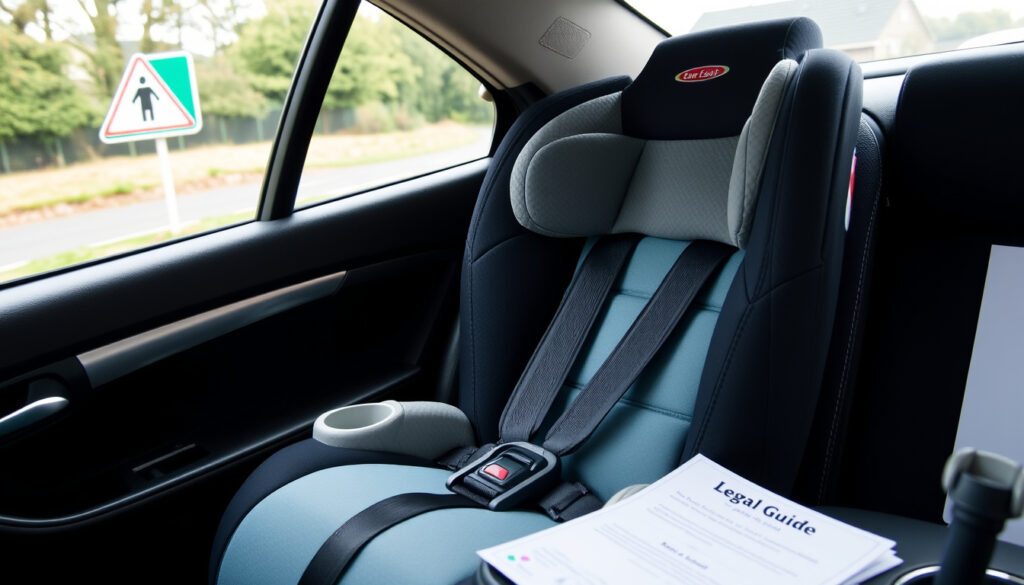
Booster Seat Ireland: Age, Weight, and Legal Rules
If you’re a parent in Ireland, the question of when to switch your child to a booster seat can feel like a puzzle with shifting pieces—the rules are based on height and weight, not age, and the legal threshold is 150 cm or 36 kg, whichever comes first. This guide unpacks the law, practical milestones, and common pitfalls.
Minimum age for booster seat: 4 years (approx.) ·
Minimum weight for high-back booster: 15 kg ·
Legal requirement until: 150 cm or 36 kg ·
Fine for non-compliance: €120
Quick snapshot
- Booster seat required until 150 cm or 36 kg in Ireland (Road Safety Authority (RSA) – Ireland’s road safety regulator)
- Backless booster allowed only from 22 kg (approx. 6 years) (Halfords Ireland – retailer guidance)
- Exact age when a child can safely transition to a backless booster varies by individual growth (RSA – Ireland’s road safety regulator)
- Whether booster seats can be used in all vehicle models without Isofix (Health Service Executive (HSE) – Ireland’s national health service)
- Parents should check the expiry date of their booster seat and plan for the next stage when the child reaches 150 cm or 36 kg (Citizens Information – official Irish public services information)
Six key numbers define Irish booster seat rules, one pattern: they all hinge on height and weight, not age.
| Label | Value |
|---|---|
| Minimum age for booster seat | 4 years (approx.) |
| Minimum weight for high-back booster | 15 kg (33 lbs) |
| Minimum weight for backless booster | 22 kg (48 lbs) |
| Legal requirement ends at | 150 cm height or 36 kg weight |
| Fine for non-compliance | €120 |
| Injury risk reduction | 45% (HSE) |
What Age Should a Child Be on a Booster Seat?
General age guidelines
- Booster seats are typically used from age 4 or 15 kg (RSA – Ireland’s road safety regulator).
- Children must remain in a booster until they reach 150 cm or 36 kg (Citizens Information – official Irish public services information).
- Irish law makes height and weight the legal triggers, not age alone (RSA).
Weight and height thresholds
- High-back booster seats are suitable from 15 kg to 36 kg (Halfords Ireland – retailer guidance).
- Backless boosters are only recommended from 22 kg upward (Halfords Ireland).
- The HSE advises that the correct seat depends on the child’s height and weight (HSE – Ireland’s national health service).
When to move from a forward-facing car seat to a booster
- Switch only when the child exceeds the weight/height limit of the forward-facing harness (RSA – child safety in cars).
- The child should be able to sit properly without slouching or moving the seatbelt (HSE).
The implication: A child who turns 4 but weighs only 13 kg is not ready for a booster. The law is clear – weight is the decisive factor.
What Are the Rules for Booster Seats in Ireland?
Irish law compliance
- Irish law requires a child restraint until 150 cm or 36 kg (RSA).
- Backless booster seats are allowed only from 22 kg (approx. 6 years) (Halfords Ireland).
- The legal definition of a child restraint covers devices for children up to 36 kg (Irish Statute Book – S.I. No. 367/2011).
Penalties for non-compliance
- Fine for not using a proper child restraint is €120 (RSA – Ireland’s road safety regulator).
Exemptions (taxis, buses)
- Taxis and buses are exempt from child restraint requirements (Citizens Information – official Irish public services information).
Irish law is stricter than many parents assume. The €120 fine is a deterrent, but the real cost is safety. A child who outgrows the law’s threshold but still fits poorly in an adult seatbelt is at risk.
Why this matters: The exemption for taxis creates a gap in protection. Parents who rely on taxis should plan ahead with a portable booster or arrange alternative transport.
Can a 4 Year Old Use a Backless Booster?
Weight and age requirements for backless boosters
- Backless boosters are only recommended from 22 kg (approx. 6 years) (Halfords Ireland – retailer guidance).
- A 4-year-old typically weighs less than 22 kg, so a high-back booster is required (RSA – Ireland’s road safety regulator).
Risks of using a backless booster too early
- Using a backless booster too early can lead to poor seatbelt fit and increased injury risk (HSE – Ireland’s national health service).
High-back vs. backless booster comparison
- High-back booster provides head and side support, backless does not (RSA).
- The RSA advises using a high-back booster rather than a booster cushion by itself for older children (RSA).
A backless booster is lighter and cheaper, but it sacrifices side-impact protection. For a 4-year-old who weighs 18 kg, the high-back booster is the safer – and legal – choice.
The pattern: Parents often rush to backless boosters for convenience. The data says wait until 22 kg, which typically means age 6 or older.
When Can I Switch My Child to a Booster Seat?
Signs your child is ready
- Switch only when the child exceeds the weight/height limit of the forward-facing harness (RSA – child safety in cars).
- The child should be able to sit properly without slouching or moving the seatbelt (HSE – Ireland’s national health service).
Transition from forward-facing car seat to booster
- Minimum weight for a booster seat is 15 kg (Halfords Ireland – retailer guidance).
- The child must be at least 4 years old in practice, but weight is the legal trigger (RSA – Ireland’s road safety regulator).
Common mistakes parents make
- Moving to a booster too early, before the child has outgrown the harness (HSE).
- Using a backless booster before the child reaches 22 kg (Halfords Ireland).
The implication: The biggest mistake is switching too soon. A forward-facing harness is safer than a booster for a child who still fits within its limits.
Can My 7 Year Old Sit in the Front Seat in Ireland?
Front seat legal age in Ireland
- There is no specific legal age for the front seat, but the child must use a booster if under 150 cm or 36 kg (Citizens Information – official Irish public services information).
Airbag safety considerations
- Children under 150 cm should never sit in the front seat with an active airbag (HSE – Ireland’s national health service).
Best practice for older children
- The back seat is the safest place for children up to age 12 (RSA – child safety in cars).
Why this matters: A 7-year-old who is 140 cm tall still needs a booster in the back seat. Moving them to the front without a booster and with an active airbag is dangerous.
Clarity Check
Confirmed facts
- Booster seat required until 150 cm or 36 kg in Ireland (RSA)
- Backless booster allowed only from 22 kg (approx. 6 years) (Halfords Ireland)
- Front seat use allowed only if child is over 150 cm or uses a booster with airbag disabled (Citizens Information)
What’s unclear
- Exact age when a child can safely transition to a backless booster varies by individual growth (RSA)
- Whether booster seats can be used in all vehicle models without Isofix (HSE)
- Whether retailer advice (15 kg for high-back booster) matches legal requirements exactly (RSA)
“All children under 150 cm in height or weighing less than 36 kg must use a child restraint system suitable for their height and weight when travelling in a car or goods vehicle other than a taxi.”
– Citizens Information – official Irish public services information
“The correct child seat or booster seat depends on the child’s height and weight. This usually means a car seat until around age 12.”
– Health Service Executive (HSE) – Ireland’s national health service
“Older children should use a high-back booster seat for as long as possible, up to 36 kg, rather than a booster cushion by itself.”
– Road Safety Authority (RSA) – Ireland’s road safety regulator
“The fine for not using a proper child restraint is €120, and the law is enforced.”
– RSA – Ireland’s road safety regulator
For Irish parents, the choice is clear: use a high-back booster from 15 kg until your child reaches 150 cm or 36 kg, and keep them in the back seat. The law is on your side, but only if you follow the measurements, not the years.
- Related reading: Blood Pressure: Normal, High, Stroke Level & How to Lower It
- Related reading: Poison Ivy: Identification, Rash Treatment, and Myths Debunked
odo.ie, myvehicle.ie, rsa.ie, aig.ie, visualfoodie.com, irelandpress.net, road-safety-charter.ec.europa.eu
Frequently asked questions
Can I use a booster seat in a taxi in Ireland?
Taxis are exempt from child restraint requirements under Irish law, so you are not legally required to use a booster seat. However, it is strongly recommended for safety. You can bring a portable booster seat or choose a taxi service that provides one. (Citizens Information)
Do booster seats expire?
Yes, booster seats have an expiry date, usually 6 to 10 years from manufacture. The date is printed on the seat. Expired seats may have degraded plastic or webbing. Always check the expiry before buying a second-hand seat. (RSA)
What is the best booster seat for a narrow car?
For narrow cars, look for a booster seat that is specifically designed as “narrow” or “slim”. Many brands offer models that fit three across in the back seat. Check the width specification before purchase. (Halfords Ireland)
How to clean a booster seat?
Most booster seats have a removable cover that can be machine washed on a gentle cycle. The plastic shell can be wiped with a mild soap solution. Never use harsh chemicals. Always air dry the cover. (HSE)
Can a booster seat be used on an airplane?
Most booster seats are not approved for use on aircraft because they lack a harness. Only forward-facing car seats with a 5-point harness are typically certified for planes. Check with your airline. (RSA)
How do I know if my child fits correctly in a booster seat?
The lap belt should lie across the upper thighs, not the stomach. The shoulder belt should cross the centre of the chest and shoulder, not the neck or face. The child should be able to sit back against the seat without slouching. (HSE)
Are booster seats required for children on school buses?
School buses are classified as large passenger vehicles and are exempt from child restraint requirements. However, if a child is travelling in a private car to school, the standard rules apply. (Citizens Information)
More related posts
 Bank of America Login: Secure Access & Troubleshooting Guide
 Johnny Knoxville: Biography, Net Worth, and Life After Jackass
 New Serie to Watch in 2026: Top Trending Show on Netflix, Prime
 Margaret Atwood: Biography, Major Books, and Quotes
 8500 USD to CAD – Convert US Dollars to Canadian Dollars Today
 Cm to Ft and Inches – Step-by-Step Conversion Guide
 For Whom the Bell Tolls – Summary, Themes and Analysis
 Olympic Hockey Scores Today: USA Gold vs Canada OT