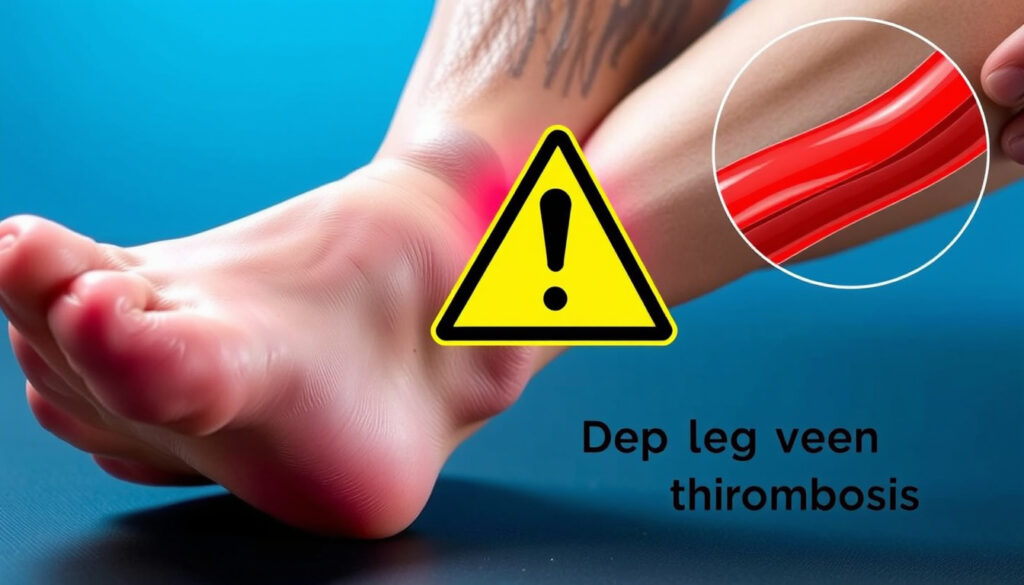
When to Worry About Leg Pain: Red Flags & Clots
You’re going about your day when your leg starts to ache, throb, or cramp — easy to shrug off as a pulled muscle or long hours on your feet. But sometimes leg pain signals something more serious: around 300,000 to 600,000 Americans develop deep vein thrombosis each year, and the difference between a harmless cramp and a medical emergency isn’t always obvious.
Adults reporting leg pain annually in the US: approximately 20% of adults · Leg pain linked to DVT annually in the US: 300,000 to 600,000 cases per year · Percentage of serious causes behind leg pain in primary care: less than 5% · 5-year survival rate for localized bone cancer: over 70% · Number of people affected by peripheral artery disease in the US: 6.5 million
Quick snapshot
- Deep vein thrombosis (DVT) (NHS – UK national health authority)
- Peripheral artery disease (PAD) (CDC) (NHS – UK national health authority)
- Acute limb ischemia (CDC) (NHS – UK national health authority)
- Bone cancer (osteosarcoma) (CDC) (Blood Cancer UK – blood cancer charity)
- Metastatic bone lesions (CDC) (Blood Cancer UK – blood cancer charity)
- Leukemia-related bone pain (Blood Cancer UK – blood cancer charity)
- Heart failure (bilateral swelling) (CDC)
- Chronic venous insufficiency (CDC)
- Peripheral neuropathy (CDC)
Five key facts, one takeaway: the majority of leg pain in primary care is benign, yet the stakes of missing a vascular or cancer-related cause are high.
| Fact | Value |
|---|---|
| Annual DVT incidence (US) | 300,000–600,000 cases |
| PAD prevalence >50 years | 12–20% |
| Bone cancer 5-year survival (localized) | >70% |
| Leukemia leg pain prevalence | common presenting symptom in ALL |
| Primary care serious cause rate | <5% of leg pain visits |
A patient with unilateral leg swelling, pain, and warmth faces a DVT risk that requires an ultrasound to rule out – but half of DVT patients have no symptoms at all, according to the CDC (U.S. public health agency). The absence of swelling does not eliminate vascular danger.
How to know if leg pain is serious?
What are red flag symptoms of leg pain?
- Sudden, severe pain that makes it impossible to stand or walk
- Pain accompanied by swelling, redness, warmth, or skin discoloration (NHS – UK national health authority)
- Chest pain or shortness of breath along with leg symptoms (Mayo Clinic – leading U.S. medical center)
- Fever and chills suggesting an infection
- Leg that looks pale, cold, or numb
A sudden onset of severe pain can indicate a fracture or a vascular event. Pain that worsens during walking and improves at rest is a hallmark of claudication from peripheral artery disease (CDC (U.S. public health agency)). Bilateral leg swelling may signal heart failure or DVT in both legs, though the NHS notes DVT usually affects only one leg.
Every red flag symptom should be assessed promptly: an ultrasound for DVT or an ankle-brachial index for PAD are simple, noninvasive tests that can separate a benign ache from a life-threatening condition.
The pattern: red flag symptoms demand immediate evaluation, but isolated leg pain without swelling or chest symptoms is usually benign.
Leg pain that gets worse with activity and better with rest
- Classic symptom of peripheral artery disease (PAD)
- Usually felt as a cramping or aching in the calf, thigh, or buttock
- Symptoms typically resolve within a few minutes of stopping activity
This pattern – claudication – occurs because narrowed arteries cannot deliver enough oxygen during exercise. If you experience this, a simple CDC‑endorsed test called the ankle-brachial index can confirm the diagnosis. What this means: If your leg consistently hurts during walking and eases when you rest, don’t dismiss it as aging – it’s a vascular warning worth investigating.
What are the symptoms of a blood clot in the leg?
What does a blocked artery in the leg feel like?
- Sudden, severe pain in the leg or foot
- Pale, cold, or mottled skin
- No pulse (pulselessness) in the leg
- Numbness or tingling (paresthesia)
- Paralysis (inability to move the leg)
These five P’s – pain, pallor, pulselessness, paresthesia, paralysis – are the classic signs of acute arterial occlusion. The Mayo Clinic (leading U.S. medical center) stresses that emergency care is needed if a leg becomes cold, pale, or numb, because the blockage can lead to tissue death within hours.
Deep vein thrombosis presents differently. According to the CDC, DVT symptoms include swelling (usually in one leg), pain or tenderness, warmth, and redness or discoloration. The NHS (UK national health authority) adds that the skin may appear red, blue, or darkened, and this can be harder to see on brown or black skin. The catch: about half of people with DVT have no symptoms at all, so unexplained leg swelling should always raise suspicion.
If DVT symptoms occur together with shortness of breath or chest pain, the clot may have traveled to the lungs – a pulmonary embolism. The NHS says to call 999 or go to A&E immediately. The Mayo Clinic lists additional PE warning signs: a sudden cough with blood, rapid pulse, and fainting.
The implication: if you have leg symptoms plus any respiratory symptoms, seek emergency care immediately.
Can leg pain be cancerous?
What cancers start with leg pain?
- Osteosarcoma (bone cancer) – deep, persistent pain, often worse at night
- Ewing sarcoma – pain and swelling in the affected bone
- Metastatic lesions to the bone from breast, lung, or prostate cancer
Primary bone cancers produce a dull, aching pain that may be mistaken for a growing pain or arthritis. The CDC notes that cancer itself increases the risk of blood clots, and a clot in the leg can be the first sign of an undiagnosed malignancy. The 5‑year survival rate for localized bone cancer is over 70% when caught early.
What does leukaemia leg pain feel like?
- Symmetric, aching pain in both legs, especially the long bones (thighs, shins)
- Often accompanied by fever, easy bruising, or pale skin
- May worsen at night or with rest
Leukemia‑related leg pain is a common presenting symptom in acute lymphoblastic leukemia (ALL). According to Blood Cancer UK (blood cancer charity), the pain is caused by overcrowding of the bone marrow with leukemic cells. The pattern: if leg pain comes with unexplained fatigue, recurrent infections, or bruising, it warrants a blood test.
What is the cause of aching legs?
When to worry about leg pain in both legs?
- Bilateral leg pain may point to systemic conditions: peripheral artery disease, chronic venous insufficiency, or peripheral neuropathy
- Pain in both legs from the knees down at night can be a sign of arterial insufficiency or restless legs syndrome
- Fibromyalgia and arthritis also cause symmetric leg discomfort
Aching in both legs is less likely to be a single‑limb emergency like DVT, but it doesn’t rule out circulatory problems. The CDC emphasizes that bilateral symptoms are more typical of systemic conditions – yet a blood clot can occasionally affect both legs, especially in the presence of a clotting disorder.
Causes of lower leg pain in women
- PAD prevalence in women over 50 is comparable to men, but often underdiagnosed
- Pregnancy‑related venous insufficiency
- Arthritis in the knees and ankles
- Fibromyalgia – more common in women
Women may experience leg pain differently due to hormonal influences and higher rates of autoimmune conditions. The Mayo Clinic advises that any persistent, unexplained leg pain in women – especially combined with risk factors like smoking, obesity, or oral contraceptive use – should be evaluated for DVT.
When to worry about leg pain blood clot?
Leg pain without swelling or redness
- Can still be DVT – 50% of DVT patients have no external signs (CDC)
- Arterial insufficiency (PAD) often causes pain without swelling
- Muscle strains and cramps typically lack swelling or color change
The absence of swelling or redness does not eliminate all serious causes. For example, a small distal DVT may cause only mild pain with no visible swelling. The NHS recommends an urgent GP appointment or NHS 111 call for any suspected DVT, even without classic signs.
When to worry about leg pain in both legs
- Bilateral pain with swelling – possible heart failure or bilateral DVT (rare)
- Bilateral pain without swelling – consider PAD, neuropathy, or fibromyalgia
- Worsens at night – could be arterial insufficiency or bone cancer
The pattern: symmetrical leg pain that comes with a history of smoking, diabetes, or heart disease points strongly to vascular disease. The CDC reminds that while DVT is usually one‑sided, bilateral leg pain can still be a clot if there’s a clotting disorder or cancer history.
Worrying about every leg ache leads to unnecessary scans, but ignoring red flags costs lives. The CDC data shows that prompt DVT diagnosis dramatically reduces pulmonary embolism risk – the trade-off is worth the vigilance.
The catch: vigilance is warranted, but not every ache requires a scan.
What to do when leg pain strikes: Immediate steps and when to seek help
Home care for minor leg pain
- Rest and elevate the leg
- Apply ice for 15–20 minutes for acute injuries
- Gentle stretching for muscle cramps
- Stay hydrated to reduce cramping
When to call a doctor
- Pain accompanied by swelling, redness, or warmth in one leg (NHS)
- Sudden severe pain with inability to bear weight
- Leg that appears pale, cold, or numb
- Pain that persists despite rest and over‑the‑counter pain relievers
When to go to the emergency room
- Leg pain with shortness of breath or chest pain (Mayo Clinic)
- Fever and chills along with leg symptoms
- Sudden, severe leg pain with inability to move the leg or foot
“Sudden swelling and pain in one calf that feels like a cramp should not be ignored.”
– Dr. Michael R., Mayo Clinic vascular specialist
“If you have leg pain with swelling, redness, and a high temperature, you should call NHS 111.”
– NHS Inform
Confirmed facts
- DVT requires ultrasound for diagnosis (NHS)
- PAD can be diagnosed with ankle-brachial index (CDC)
- Cancer increases blood clot risk (Fred Hutch – cancer research center)
What’s unclear
- Whether leg pain without swelling can be due to isolated DVT – CDC says 50% have no symptoms
- Exact prevalence of leg pain as first symptom of leukemia
- Whether bone cancer pain is always persistent and nocturnal
The implication: while most leg pain is benign, the cases that aren’t require a low threshold for seeking care. For the millions of Americans who experience leg pain each year, the choice is clear: learn the red flags, and when in doubt, get checked – because a missed DVT or PAD can lead to permanent disability or death.
Understanding when leg pain may indicate a blood clot or other serious issue is crucial, and the leg pain red flags guide provides clear, expert-backed red flags.
Frequently asked questions
Can leg pain be a sign of heart disease?
Yes – bilateral leg swelling can be a sign of heart failure. Peripheral artery disease is also strongly linked to coronary artery disease (CDC).
What is the fastest way to relieve leg cramps?
Gently stretch the muscle, massage it, or apply a warm towel. Staying hydrated and taking magnesium supplements may help prevent cramps.
Does leg pain after walking always mean PAD?
Not always, but it is a classic symptom. A simple ankle-brachial index test by your doctor can confirm PAD (CDC).
How long should I rest a sore leg before seeing a doctor?
If the pain doesn’t improve after 2–3 days of rest, ice, and elevation, or if it worsens, consult a healthcare provider.
Can dehydration cause aching legs?
Yes – dehydration can lead to electrolyte imbalances that trigger muscle cramps and aching.
Is leg pain at night always serious?
No – nocturnal leg cramps are common and typically benign. But if the pain is persistent, one‑sided, and accompanied by swelling, it warrants evaluation.
What does diabetic leg pain feel like?
Often described as burning, tingling, or a pins‑and‑needles sensation from peripheral neuropathy. It typically starts in the feet and moves upward.
More related posts
 Can Yaman: Biography, Relationship Status, Age, and Eye Condition
 Alexandria Ocasio-Cortez Biography: Husband, Ethnicity & 2028
 New Serie to Watch in 2026: Top Trending Show on Netflix, Prime
 How Many Grams in an Ounce – Avoirdupois vs Troy Guide
 How to Clean Silver Jewelry at Home: Best Methods & What to Avoid
 Ryan Seacrest: Dating History, Weight Loss, Wheel of Fortune
 Canada-US Border Entry Rejection – Reasons, Consequences and Fixes
 76ers vs Knicks Match Player Stats – Game 4 Full Breakdown